By Lindsay
One night, I came across a baby snake in the street while walking our dog. Knowing that he might be killed by neighbors, I got my snake hook & walked him to the nearest wooded area.
I had gotten a good look at him, so I went back inside, washed my hands & went to the Virginia Herpetological Society website to get an ID on him & learn more about him.
The first snake on their ID page is of course the copper head, because that’s what most people knee jerk in fear thinking they’ve found when they encounter a wild snake.
For a minute I thought I might have actually found a copper head, but after exploring more, I determined it was a baby rat snake.
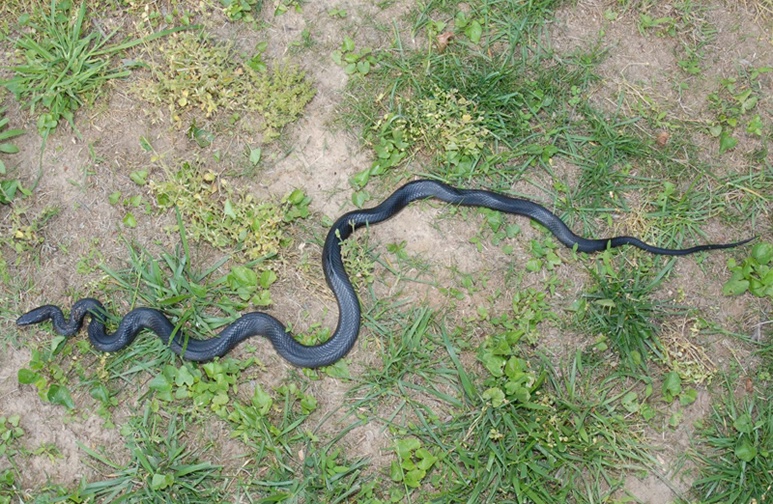
I know what you’re thinking. Those snakes are pretty different, how did you manage to mix them up? Adult Rat snakes are solid black & adult copper heads are brown with a bold pattern.

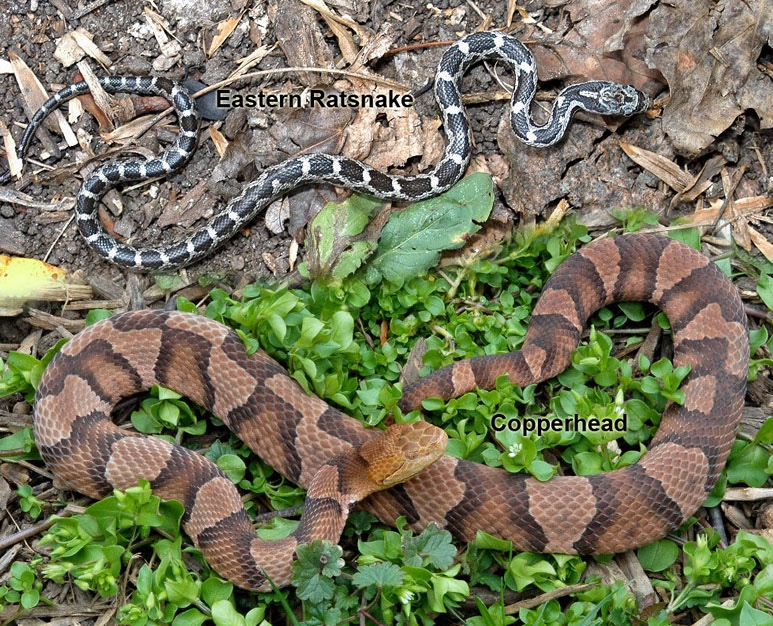
But wait for this plot twist before you go pulling your 44 out of your Ford for the copperhead like Hardy sings in Sold Out. When they’re babies, they actually look similar if you don’t know what to look for!
Here is the way I learned to remember how differentiate between the two:
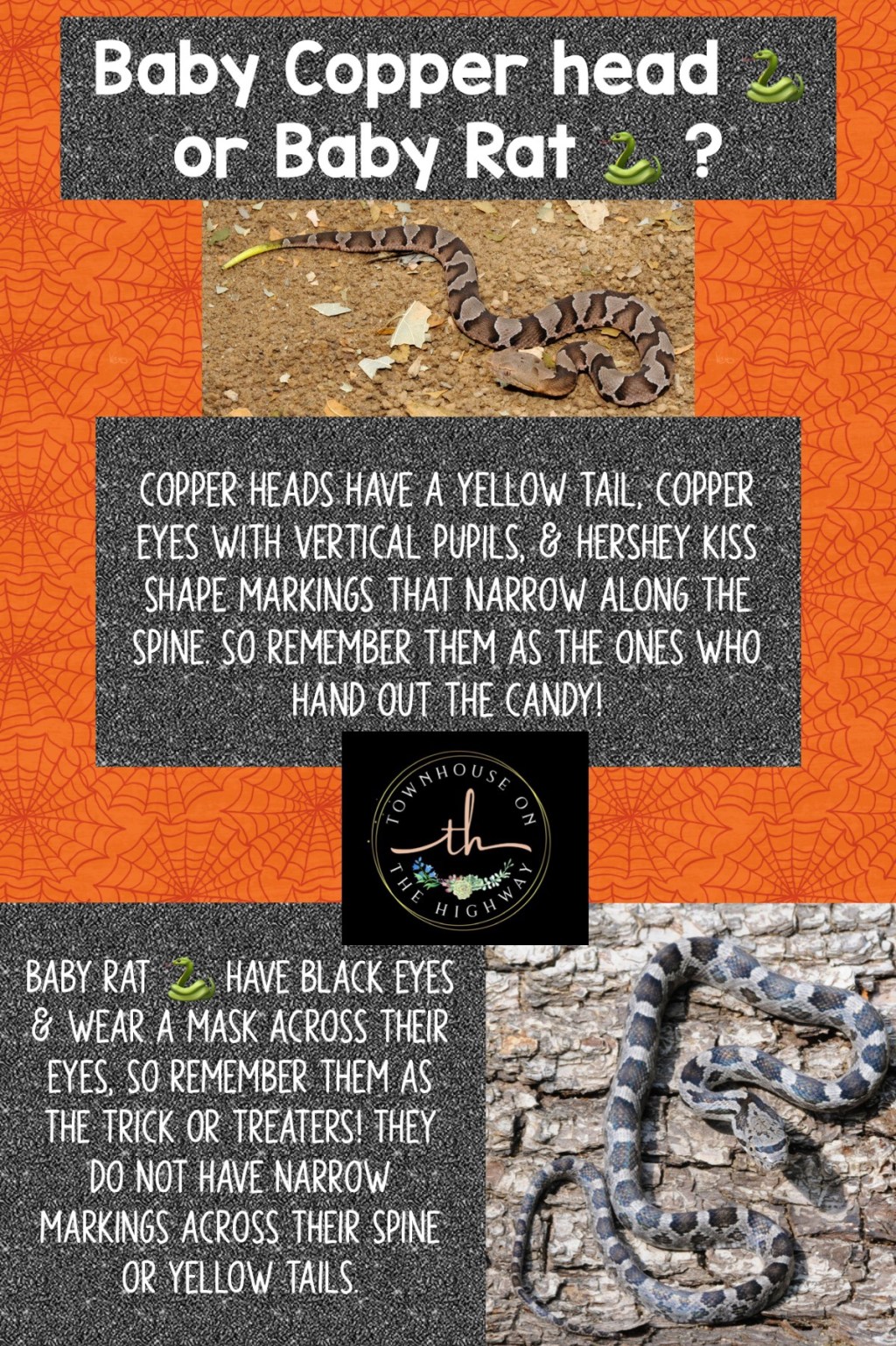
The rat snake is a trick or treater because he wears a mask and his appearance tricks people.
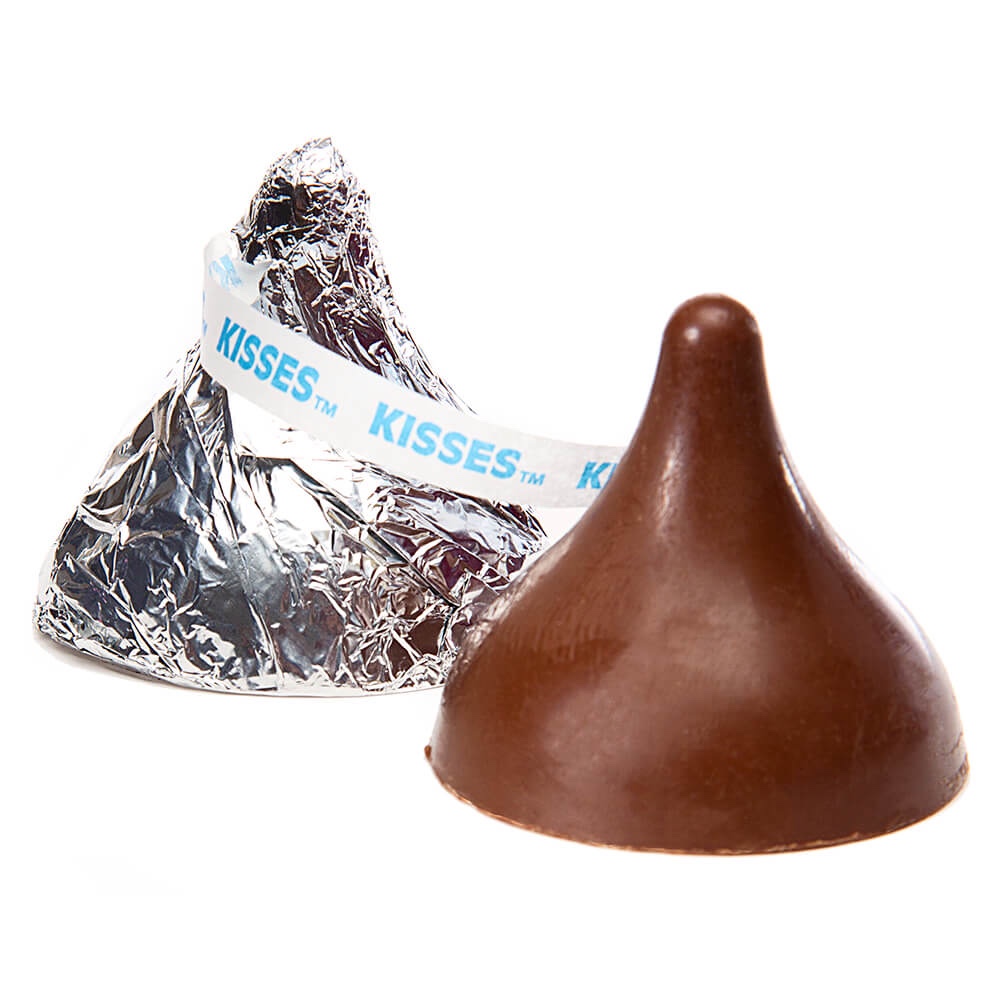
The copperhead hands out candy to trick or treaters because his coloration pattern looks like Hershey’s kisses.
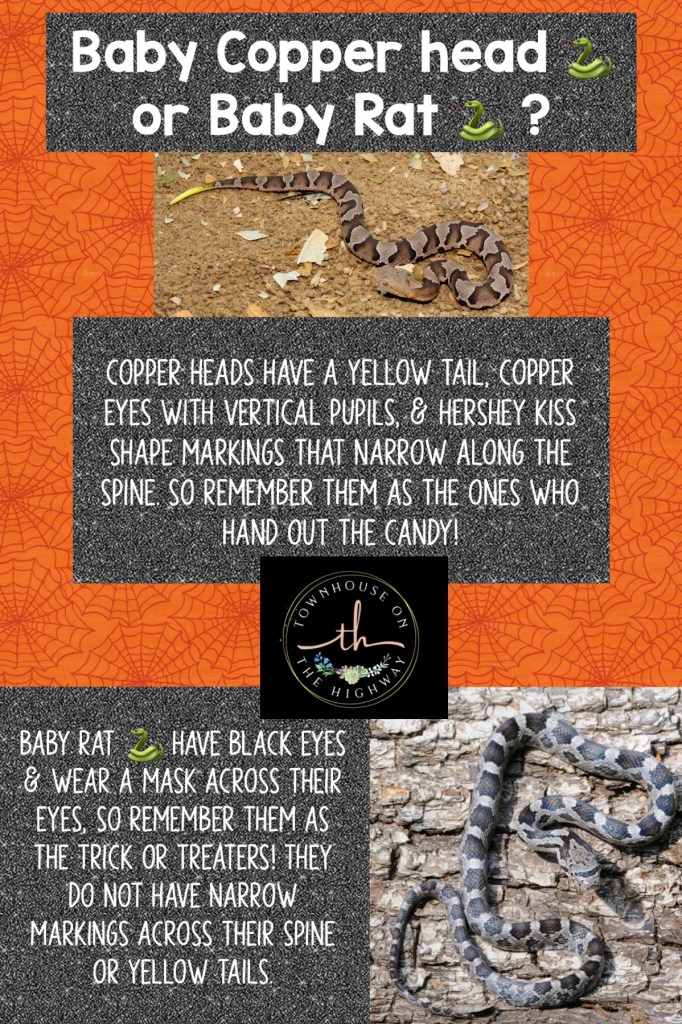
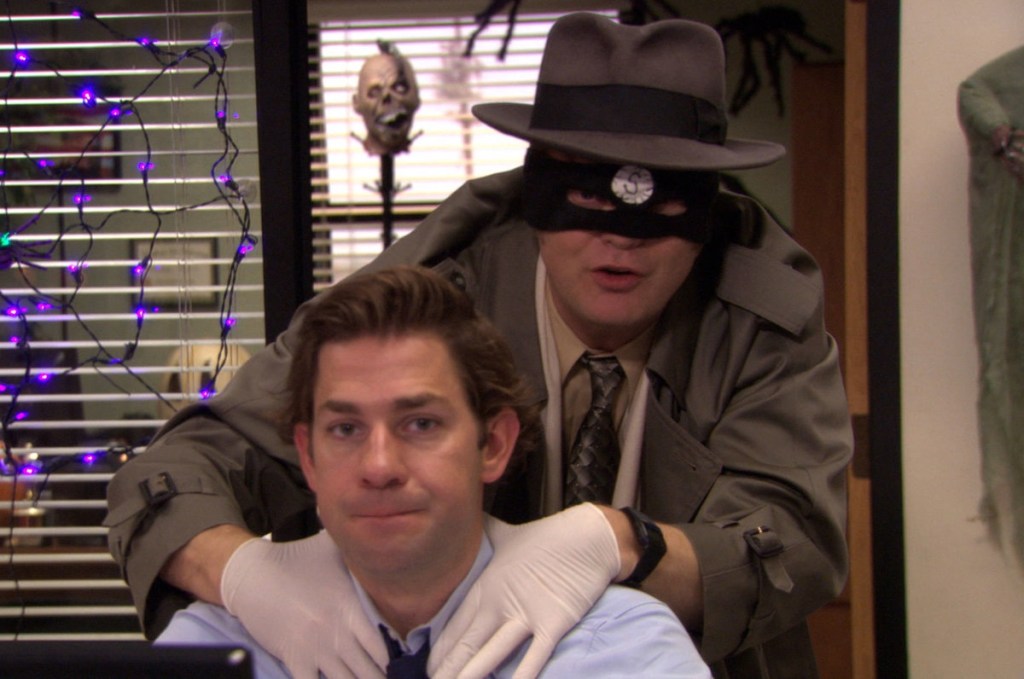
A juvenile rat snake wears a mask across his face & eyes, of comparable style to Dwight Schrute’s Scranton Strangler costume on The Office. Also, he has black eyes.
A juvenile copper head has a yellow tail & no mask. The copper head has copper colored eyes & vertical pupils. *Do not rely on vertical pupils for an ID, as different light affects their appearance.*
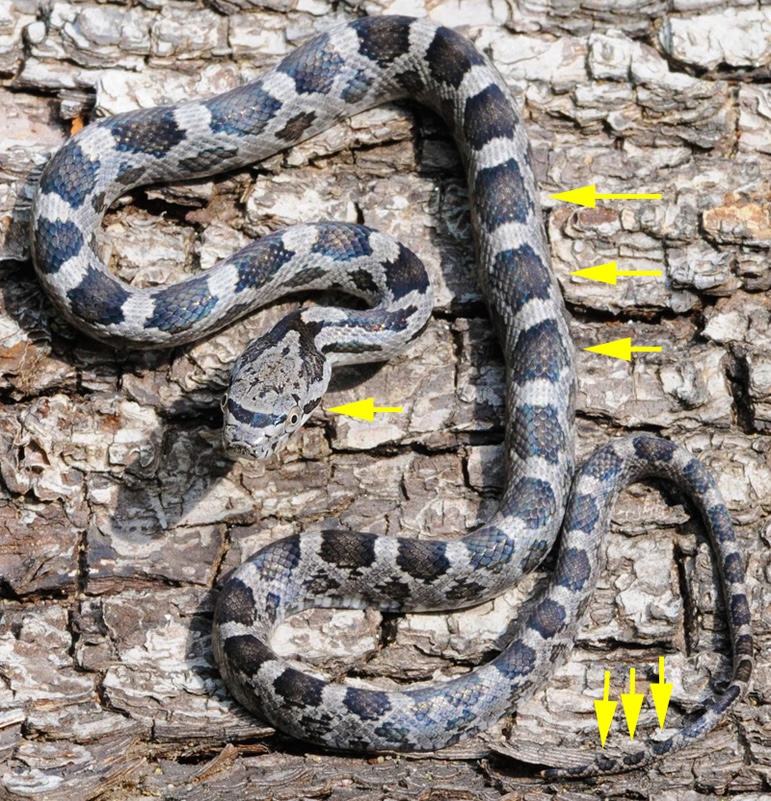
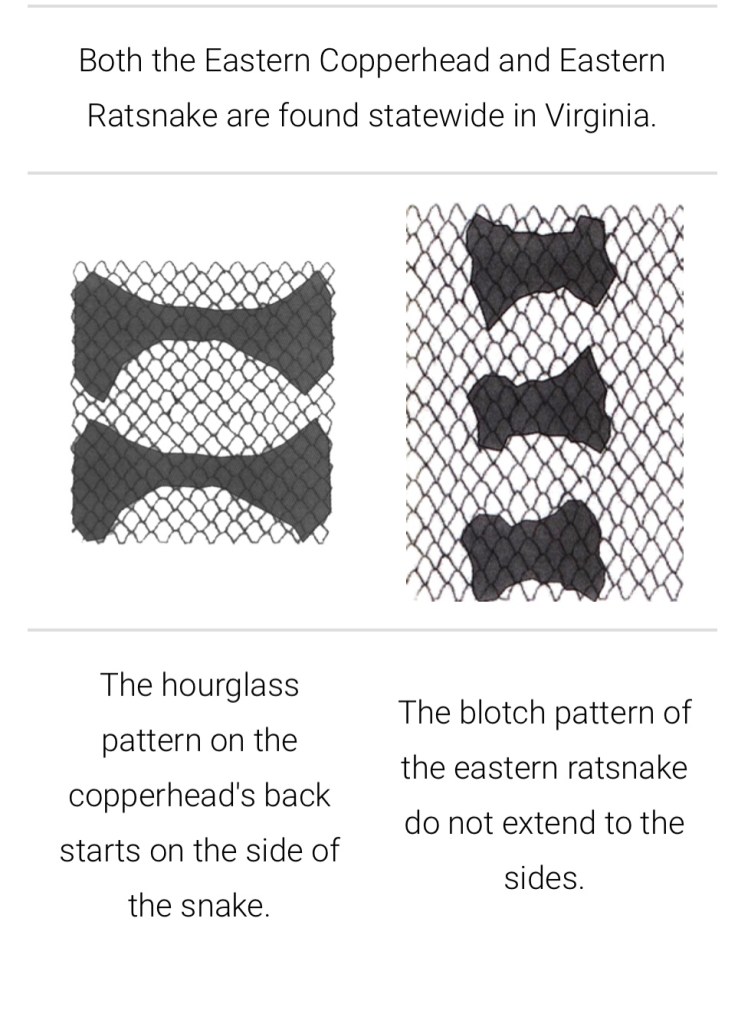
His markings look like Hershey kisses from the side. They narrow along his spine, like the paper flag of the Hershey kiss wrapper. The juvenile rat snake’s markings do not narrow at the spine.
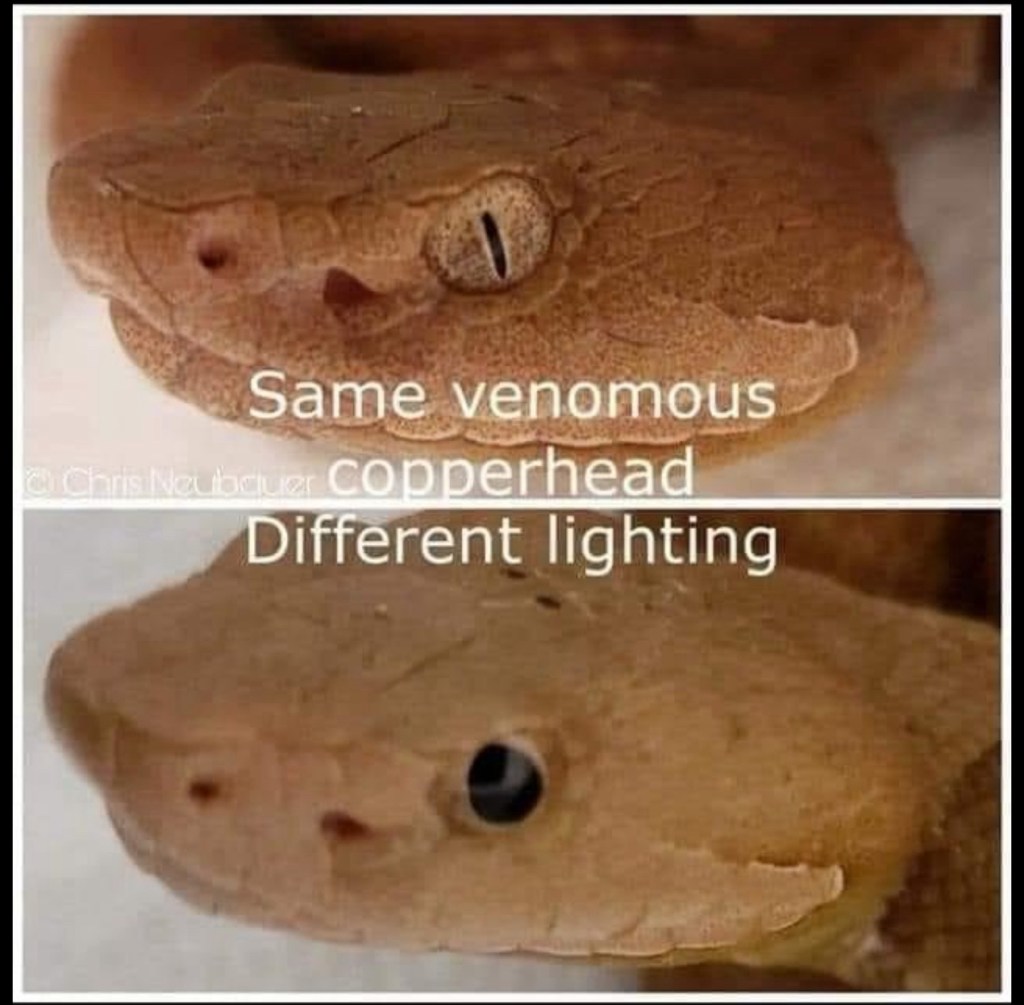
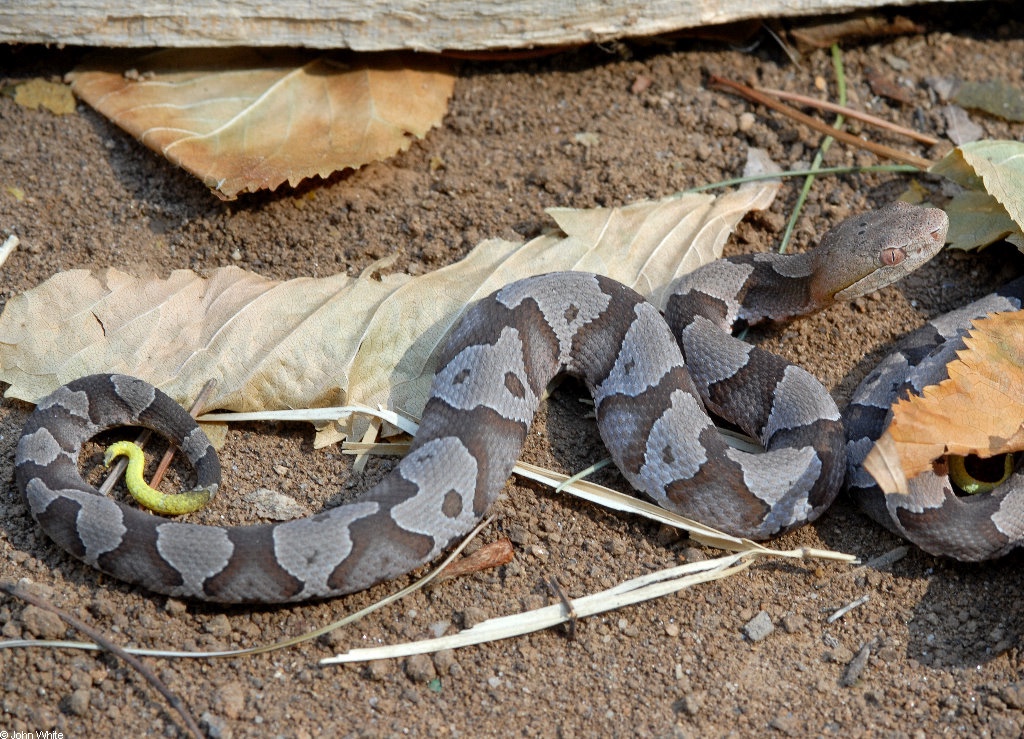
Here is a closer comparison of their markings from the Virginia Herpetological Society website:
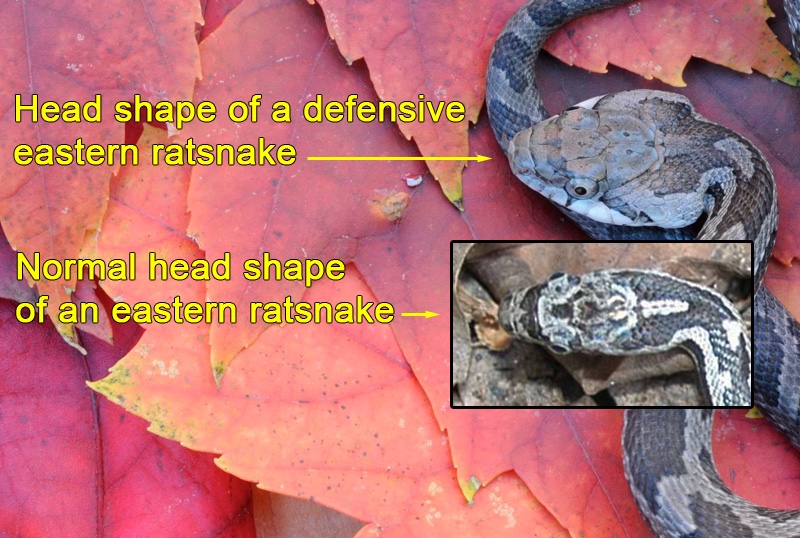
Another way these snakes can look similar is the rat snake can even make his head shaped similarly to a copper head if he feels like things are about to go down. What a jokester!
If you have young children, you may be interested in my Virginia Wildlife Activity Book to teach them about these snakes & our other wild neighbors.
There are other special lessons here too!
Even if you don’t like snakes, which I know many of you don’t, there is simply no denying that they are an important member of our ecosystem.
Rat snakes are great neighbors to have because they eat mice!
Mice are more likely to frequent human dwellings than snakes, unless of course the snake is after a mouse. Mice bring awful diseases & ticks into our homes and yards that make us sick. They nest in towels & cabinets & poop!
Snakes are less likely to be in an inhabited human dwelling than mice. Though you may find them in your yard, they’re likely to keep their distance. Even if you do cross paths, as long as you give them space, you’re not likely to have a conflict. They generally don’t bother you unless you bother them.
I have had 3 experiences first hand of giving a snake space to successfully avoid conflict:
1. Walking my dog on a paved wooded path, she stepped off to sniff the grass & stepped directly onto a black rat snake. I noticed less than a minute after she did this & redirected her as soon as I saw the snake. We all went our own ways.
2. My horse was grazing near a pile of branches collected from fallen trees. A very colorful corn snake was curled up on the branches, sunbathing his rotund mouse filled middle, giving away how much he had eaten at the day’s lunch buffet. My horse’s head was about 10 inches from the snake. Since he was grazing on grass, his head was moving quite a bit. The snake was not so much as hissing. I attached a lead rope to his halter & directed him to another part of the field. We never crossed paths again.
3. My son was playing at the playground. He was drumming on the playground’s drum set & when I stepped around to take a photo of him, I saw a snake curled up on the other side of the drums. It was a garter snake so very small. I was happy to see him, as he is great neighbor to have – he eats spiders! I picked up my son & we stood still while we observed him from a safe distance. He coiled & hissed for a moment, then slithered away. When he moved through the mulch he became nearly invisible. We have not crossed paths again.
This trick is another example of how God loves every member of His creation.
This potential bamboozlement of identity shows us how God cares for His creation!
To help the baby rat snakes have a chance to make it to adulthood to fulfill the important role of pest control specialist He gave them in the ecosystem, He gave them the appearance of copper heads to keep predators away from them.
Conclusion
The next time you see a snake, please don’t kill him or her; they are valuable to our ecosystem!
They especially play an important role in Virginia, where they eat prey that carry ticks. Most people in Virginia know how common Lyme disease is here – snakes can help us with this!
Observe him or her from a safe distance. They aren’t likely to strike or follow you unless you mess with them! They are more likely to slither away from you, so give them room to do that.
To learn more about the 34 types of snakes native to Virginia (only 3 of which are venomous!) visit the Virginia Herpetological Society website here. If you have young children, you may be interested in my Virginia Wildlife Activity Book.
If you come across an injured snake, such as one caught in garden netting or a pest trap, Blue Ridge Wildlife Center can help you. They also share educational information regularly that helps us learn how to peacefully coexist with our wild neighbors.
 Townhouse On The Highway
Leave a comment